
TLDR
To adapt gift idea for different people, preserve the useful core but change four things: practical fit, freedom of choice, one meaningful personal cue, and presentation. A tea bundle can become a comforting care package for a friend, a polished break-room treat for a team, or a simple host gift. The concept repeats; the reason behind each version does not.
You do not need a completely original concept for every birthday, thank-you, holiday, or celebration. A reliable gift format can become part of your gifting style. The goal is to make the recipient understand why this particular version suits them.
Keep the concept, change the recipient experience
Start by separating the gift's core idea from its individual details. “A cozy evening” is a concept. A lavender candle, wool blanket, and romantic movie are details—and they will not suit everyone. Keep the promise of comfort while changing what comfort means to the person receiving it.
The same applies to coffee kits, restaurant gift cards, homemade food, framed memories, desk accessories, and hobby gifts. Before buying anything, finish this sentence: “This gift gives the recipient a chance to…” The answer might be rest, celebrate, choose something enjoyable, remember a shared day, host more easily, or make a daily routine nicer.
That sentence is your reusable foundation. Everything else should be adapted around the recipient.
Use four decisions to adapt a gift idea for different people
1. Decide what would be useful or enjoyable now
Think about the recipient's present life rather than relying only on a permanent label such as “coffee person,” “traveler,” or “new parent.” Their schedule, living space, current interests, and energy level may matter more. Someone who loves cooking may appreciate a special ingredient when life is calm but prefer prepared food during a demanding week.
Ask what could make the person's week easier, more comfortable, or more enjoyable. Listen for stated preferences. A registry, wish list, favorite shop, dietary note, or direct request is valuable guidance rather than an obstacle to creativity. Research has found that close friends can prioritize the message conveyed by a gift over what recipients have said they want. That is a useful warning: proving how well you know someone should not come at the expense of listening to them.
2. Choose the right amount of flexibility
Use a specific gift when you know the person's preferences and the item will fit comfortably into their life. Build in choice when size, scent, flavor, schedule, storage, or style is uncertain. Flexibility could mean a gift receipt, several small flavors instead of one large package, an unbooked experience, or a gift card paired with a thoughtful note.
A flexible gift is not automatically impersonal. “Choose something you like” becomes much warmer when the note explains why you selected that shop, restaurant, bookstore, or activity.
3. Add one genuine personal signal
Personalization does not have to mean printing a name on every object. It can be a familiar flavor, a color the recipient wears often, a reference to a shared joke, or a note recalling a specific kindness. Research reported in the Journal of Consumer Psychology suggests that recipients may also respond well when a gift reflects a meaningful characteristic of the giver. Research on gifts that reflect the giver
That creates room for a lovely middle ground: the gift can suit the recipient while carrying a little of you. You might share the tea you serve at home, a book that shaped your thinking, or a family recipe—with enough context to make the connection clear.
4. Match the presentation to the relationship
Presentation establishes tone before the gift is opened. A close friend may enjoy an affectionate note and playful wrapping. A teacher or coworker may be more comfortable with tidy packaging, a concise thank-you, and no public reveal. A host gift should generally be easy to receive without creating an immediate task.
The wrapping can vary even when the underlying gift does not. Use a handwritten tag for warmth, a box sleeve for polish, or tissue and ribbon in the recipient's favorite color. For more formal gifts, small print details can provide personality without changing the contents; this guide to premium print finishes for gift presentation explains how finishes affect the first impression.
A recipient-first checklist
Before finalizing a variation, run through these questions:
- What has the recipient explicitly said they like, need, or want to avoid?
- Would usefulness, sentiment, or freedom to choose matter most right now?
- Will the gift fit their home, routine, schedule, and available storage?
- Are there dietary, allergy, fragrance, accessibility, workplace, or cultural considerations?
- Would they feel comfortable displaying, wearing, consuming, or sharing it?
- Is the personal detail appropriate for the closeness of the relationship?
- Could a photo, joke, or emotional message make them uncomfortable if opened publicly?
- Can the card or wrapping explain the choice without adding more objects?
You will not always know every answer. When information is limited, reduce assumptions: choose flexible formats, avoid sensitive or highly visible personalization, and make the presentation warm but simple.
Worked examples: one concept, several recipients
| Base concept | Close friend | Coworker or teacher | Couple or host | Preferences not well known |
|---|---|---|---|---|
| Coffee or tea | A known favorite plus a note about a shared ritual | An individually packaged assortment with a brief thank-you | A shareable selection for after-dinner drinks | A modest shop gift card or broad sampler |
| Cozy night | A familiar snack, chosen activity, and affectionate note | A practical mug or snack with neutral presentation | Shareable treats and an easy group activity | A flexible movie, bookstore, or food credit |
| Memory gift | A privately meaningful photo or quotation | A team photo or written appreciation, with permission where appropriate | A picture connected to a shared celebration | Skip intimate imagery; use a card describing the occasion |
| Gift card | A favorite place and a suggested outing together | A useful nearby shop presented discreetly | A restaurant, market, or activity they can enjoy together | A broadly usable option with a sincere explanation |
| Homemade food | A favorite recipe adjusted to known preferences | A clearly labeled item only when workplace rules and dietary needs allow | Something shareable that does not require immediate serving | Choose a non-food alternative if ingredients or restrictions are uncertain |
Notice that each row preserves a benefit rather than a fixed object. The coffee concept offers a pleasant pause. The memory gift recognizes a relationship. The gift card protects choice. Once you identify that benefit, adaptation becomes much easier.
When to be practical, sentimental, or flexible
Choose a practical variation when the recipient has mentioned a need, dislikes clutter, or is navigating a busy transition. Practical does not mean dull. The personal layer can be in the color, upgraded version, accompanying note, or way the gift removes a small annoyance.
Choose a sentimental variation when you have a real shared history and know the recipient is comfortable with keepsakes. Keep it focused. One thoughtfully chosen photograph or a specific written memory often communicates more than a box crowded with generic “best friend” objects.
Choose a flexible variation when preferences, sizes, schedules, dietary needs, or household decisions are uncertain. This is especially useful for newer relationships, group gifts, and professional settings. For workplace occasions, the same principle appears in our guide to personalized employee appreciation gifts for small teams: usefulness and a sincere reason for thanks matter more than filling a box with unrelated extras.
It is fine to repeat a gift format that works
Many givers worry that repeating an idea will appear lazy. However, research on repeat gifting indicates that givers' concerns about seeming boring or unthoughtful can stop them from repeating gifts even when repetition may better match recipients' preferences. Read the research on repeating successful gifts
If your sibling loved an annual bookshop credit or your team appreciated the same useful year-end format, repetition can become a welcome tradition. Refresh the title, flavor, amount, message, or presentation as circumstances change. Do not replace a successful gift merely to surprise someone with a less suitable one.
The test is not whether you have used the concept before. It is whether you considered this recipient before choosing the current version.
Let packaging complete the adaptation
Packaging is most useful when it clarifies the gift. A tag can identify which package belongs to whom, explain a homemade item's ingredients, or connect a gift card to a planned treat. A card can say what the object itself cannot: “You mentioned wanting quieter evenings, so I put together a few things for a night with no plans.”
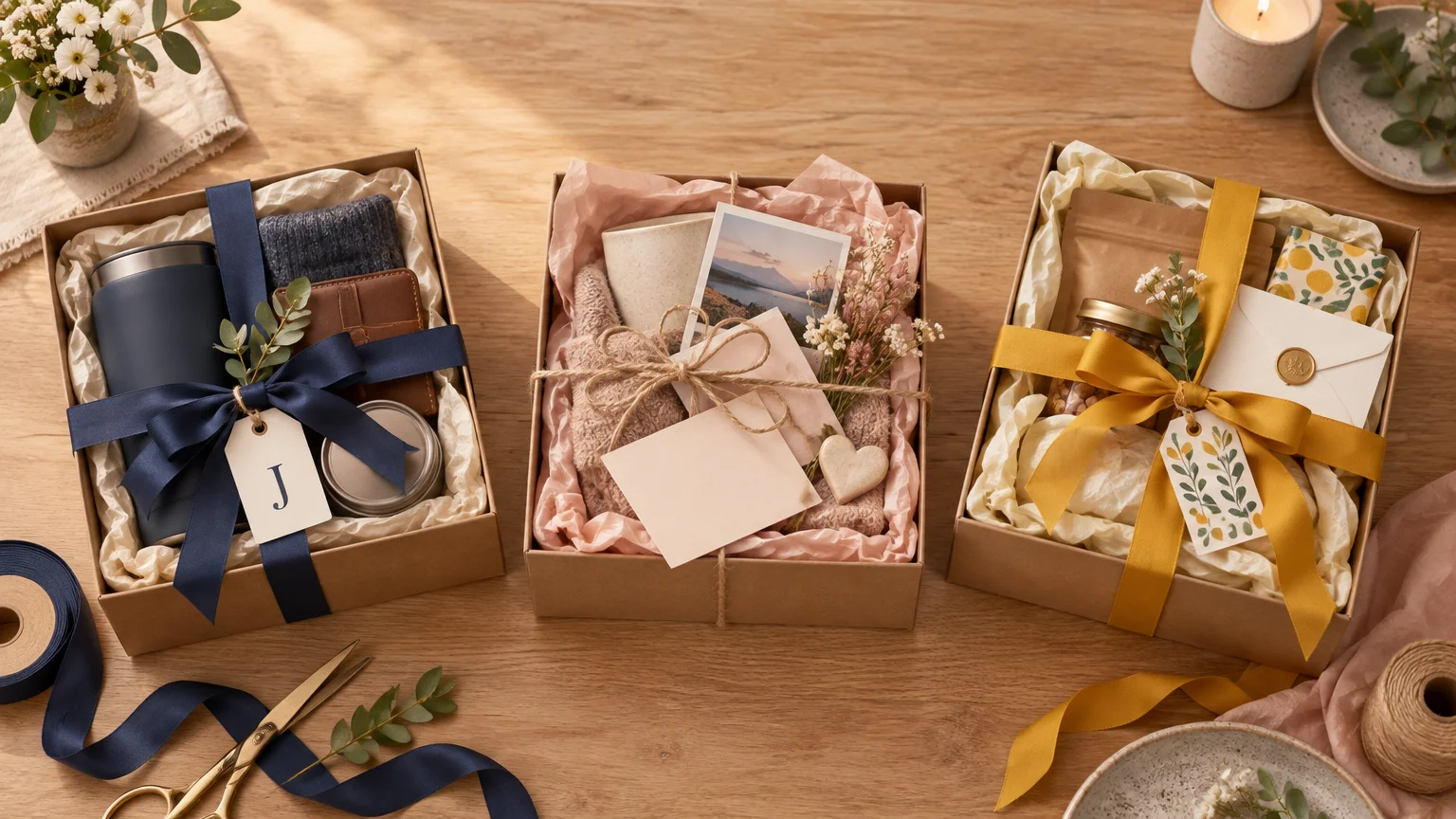
If you are preparing several gifts, create a consistent outer look and vary one element for each person. Keep the same box or paper, then change the ribbon color, tag message, or seal. Optional personalized packaging stickers can help distinguish versions or finish favor boxes, but they should support the presentation rather than serve as proof of thoughtfulness.
Current product information for one label-and-packaging sticker option lists matte and gloss finishes and sizes from 2 to 6 inches, measured by the longest side, with an artwork proof provided before approval. Confirm current specifications and measure the actual box, bag, or envelope before ordering.
Make the reason visible
A reused gift idea feels intentional when the recipient can see why this version belongs to them. Keep the core benefit, respect stated preferences, allow flexibility where your knowledge ends, and add one detail that reflects the relationship.
For your next occasion, write down the base concept in one sentence. Then choose one practical adjustment, one personal cue, and one presentation detail. That small process can turn a dependable formula into a gift that feels freshly and specifically chosen.
References
- Ask and You Shall (Not) Receive: Close Friends Prioritize Relational Signaling over Recipient Preferences in Their Gift Choices – Morgan K. Ward, Susan M. Broniarczyk, 2016
- Give me your self: Gifts are liked more when they match the giver's characteristics – Paolacci – 2015 – Journal of Consumer Psychology – Wiley Online Library
- (Not) giving the same old song and dance: Givers’ misguided concerns about thoughtfulness and boringness keep them from repeating gifts – ScienceDirect
- Custom Product and Label Stickers – CustomStickers.com